


Market Growth Remains in Early Stages
Despite steady adoption over the past decade, C-PACE is still early in the product maturity cycle and has the potential to expand by multiples from its current industry size. Industry professionals, including Engman, see no signs of slowdown. Engman predicts that the C-PACE market has the capacity to grow by four to five times its current level as awareness increases and more developers recognize the flexibility it offers for their financing strategies.
The C-PACE market has the capacity to grow four to five times from its current levels as awareness increases and more developers recognize the flexibility it offers for their financing strategies.
Where C-PACE Financing Deals Encounter Friction
Now that C-PACE is established across most U.S. commercial markets, the program itself is broadly accepted. So the primary challenge to C-PACE use is rarely legislative; rather, its common points of friction are found in complex projects where it is competing with several financing instruments. C-PACE continues to have the challenge of awareness and familiarity, especially as to its fluid integration alongside bonds, tax credits, and other structured finance components.
Successful execution often depends on coordination across multiple stakeholders, including senior lenders, brokers, bond providers, and structured finance participants. This is where C-PACE shines.
As Engman summarized:
“Developers ultimately prioritize certainty and efficiency in the capital stack. Financing structures that improve project economics and provide reliable execution are becoming increasingly important.”
Recapitalization is a Key Growth Channel
C-PACE financing is seeing strong growth and adoption for development and redevelopment in several key asset classes:
- Hospitality
- Multifamily housing
- Large-scale redevelopment projects
- Industrial properties
- Senior housing and skilled nursing facilities
At the same time, C-PACE is being applied consistently to recapitalization activity as high-cost construction debt approaches maturity.
Projects financed during lower-rate cycles are increasingly approaching refinancing in a higher-rate environment. C-PACE is being used as the long-term capital used to retire or reduce construction debt while extending the capital structure through stabilization.
Here’s why. C-PACE offers:
- Long-term, fixed-rate capital with terms up to 30 years
- Non-recourse financing
- Draws that match construction schedules
- Flexible prepayment options
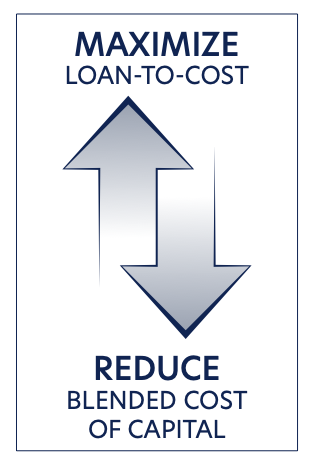
- Capital that can reduce or replace higher-cost construction debt
These features allow developers to improve financing flexibility while maintaining ownership control.
PACE Equity Finance Case Study: SkyRidge Resort Development
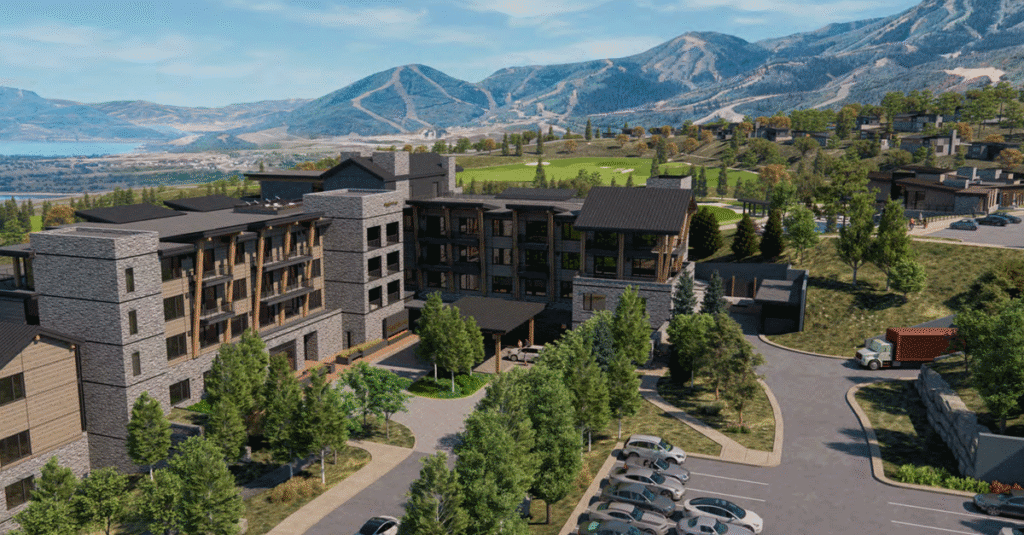
A recent development in Deer Valley, Utah, illustrates how C-PACE financing can support complex projects.
SkyRidge Resort is a mixed-use destination development featuring luxury lodging, recreational amenities, and year-round resort infrastructure.
PACE Equity Finance funded $63.3 million in long-term, fixed-rate, non-recourse C-PACE financing used to recapitalize the project’s golf course, clubhouse, and lodge components mid-construction.
The recapitalization allowed construction to move forward without requiring additional equity from the development group, preserving ownership while maintaining project momentum.
Projects such as SkyRidge demonstrate how C-PACE can integrate into complex development financing while improving overall capital efficiency.
Certainty of Execution in Complex Capital Markets
In a constrained lending environment, the reliability of capital has become increasingly important. Because of this factor, developers and capital advisors prioritize financing partners capable of delivering:
- Firm capital commitments
- Integrated investment decision-making
- Reliable capital through construction and stabilization
As Engman noted:
“Successful C-PACE execution hinges on market-leading pricing and trusted relationships, early engagement, and partners who can deliver certainty of close in a complex capital markets environment.”
The Role of Experienced C-PACE Partners
As CRE debt markets continue to adjust to tighter lending conditions, developers are increasingly focused on financing structures that improve capital efficiency while preserving ownership.
C-PACE financing has evolved from a niche sustainability mechanism into a key structural component of modern capital stacks. PACE Equity Finance operates as a direct balance sheet lender backed by a partner with $26 billion AUM, delivering binding capital commitments and end-to-end process management.
For developers and capital advisors, working with experienced partners can be a critical factor in successfully executing projects and optimizing long-term project economics. Have any questions? One of our PACE Equity Originators is here to help.