


Developers and building owners have a wide range of financing options, and the hard part is finding the combination that works — and understanding how each piece interacts with the others. PACE Equity Finance structures C-PACE inside complex capital stacks, boasting deep experience in pairing it with tax credits and incentives. The firm funded the industry’s first tax-credit-paired C-PACE transaction back in 2016 and has been innovating on complex structures ever since.
C-PACE alongside Tax Credits and Incentives
C-PACE (Commercial Property Assessed Clean Energy) is fixed-rate, non-recourse private capital with amortization up to 30 years, repaid through a non-accelerating property-tax assessment that transfers on sale or can be prepaid. It’s available for new construction, redevelopment, retrofits, and recapitalization. It can be integrated seamlessly with a range of financing options, including:
- Historic Tax Credits (HTC)
- New Market Tax Credits (NMTC)
- Local and federal incentives
- Tax Increment Financing (TIF)
- Brownfield Grants
- Utility incentives
- Economic development grants
- and more
C-PACE in the Capital Stack
C-PACE fills many roles, from gap financing to recapitalization, and works best as a replacement for substantially more expensive debt or equity — such as mezzanine or preferred equity — lowering the blended cost of capital and lifting returns. C-PACE financing covers up to 100% of eligible hard and soft costs in a construction budget — typically 30–35% of the capital stack for new construction and 50–100% for renovations.
The amortization term is determined by the life of the financed equipment, typically 25–30 years. In-house engineers at our firm do the energy audit and thereby control the key driver of C-PACE proceeds and amortization. This adds to the upfront surety of execution we can offer.
Complex Capital Stacks: Examples
Case Study: Corporate Headquarters | Adaptive Reuse
PACE Equity Finance pioneered C-PACE for brownfield projects with a 110,000 SF Class A development and partial adaptive reuse housing the headquarters of a large advertising agency. It was the first new-construction office building in the U.S. to use C-PACE and represented a $30M+ investment in a former brownfield manufacturing site. The firm funded $2.2 million — about 7% of total project cost — toward geothermal, PV solar, LED lighting, and double-pane windows.
The capital stack included:
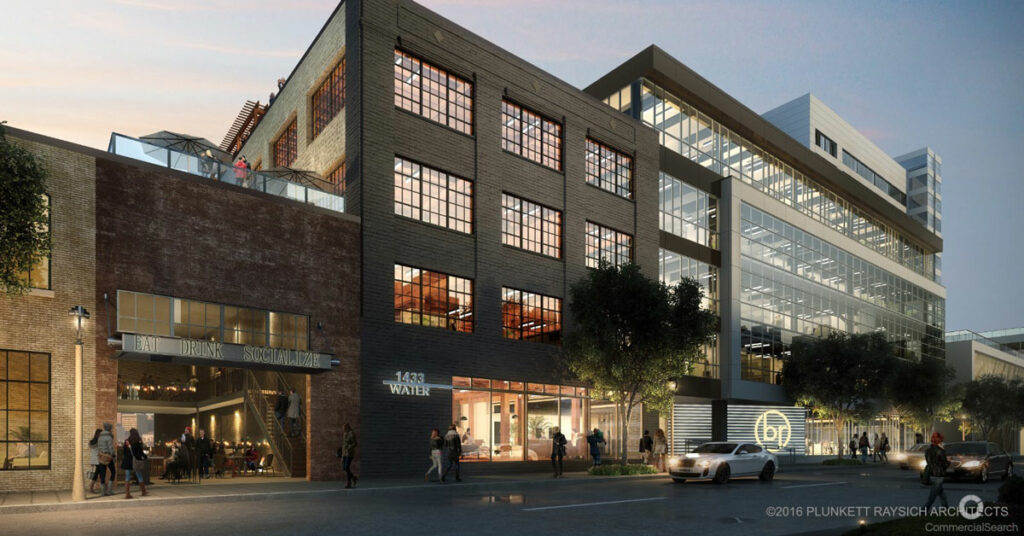
- New Market Tax Credits
- City of Milwaukee TIF
- Milwaukee Economic Development Corporation loan
- Brownfield grant
- Mortgage financing from Tri-City National Bank
Case Study: Gulfstream Hotel | HTC Renovation
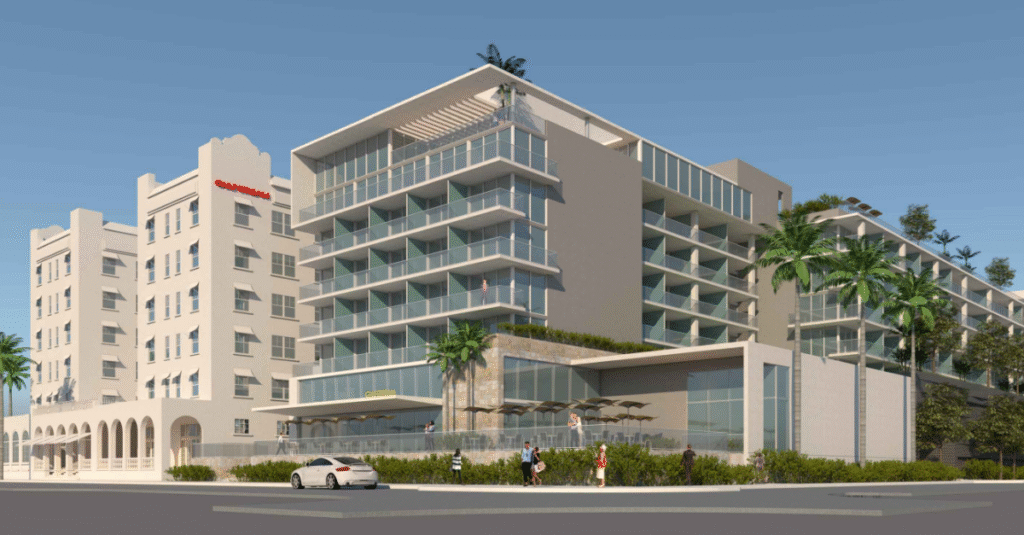
Built in 1925 and added to the National Register of Historic Places in 1983, the Gulfstream Hotel in Lake Worth Beach, Florida was restored into a 90-room oceanfront Marriott resort. PACE Equity Finance provided low-cost, fixed-rate, non-recourse financing that filled a 27% gap in the capital stack, pairing C-PACE with Historic Tax Credits and Community Reinvestment Act funds — bringing down WACC and improving project IRR.
Structuring an incentive-driven deal
If your project involves tax credits or incentives, talk to PACE Equity Finance about integrating C-PACE into your capital stack.