


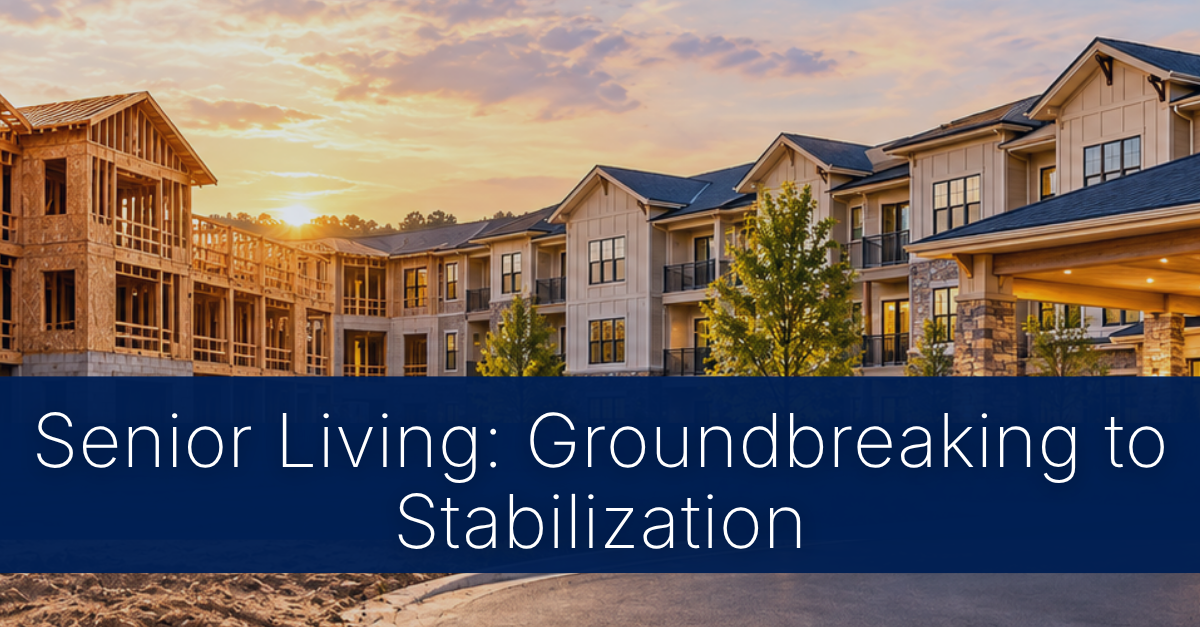
Building a Capital Stack That Lasts Through Lease-Up
Senior living development asks more of the capital stack than most asset classes. Construction budgets are system-intensive, senior lenders hold leverage tight, and once the doors open, census builds resident by resident while the construction loan clock keeps running.
Where Traditional Capital Falls Short
At groundbreaking, the gap between the senior loan and the total budget often leaves developers with hard choices: trim scope, bring in an outside equity partner, or pass on a project that otherwise pencils. After opening, the pressure shifts. Move-ins depend on care assessments, family decisions, and staffing, so lease-up can outlast the construction loan. Bridge debt, a cash-in extension, or a refinance priced for an unstabilized asset all pull capital away from operations when the community needs it most.
C-PACE addresses both moments. It is long-term, fixed-rate, non-recourse capital sized to the eligible improvements in the building — envelope, HVAC, electrical and lighting, plumbing, resiliency, and elevators. In new construction, it typically funds up to 35% of the capital stack, reducing the equity a sponsor must raise. After completion, it can recapitalize improvements already in place, up to three years after Certificate of Occupancy.
Two Communities, One Strategy
These transactions show how C-PACE works across the senior living lifecycle.
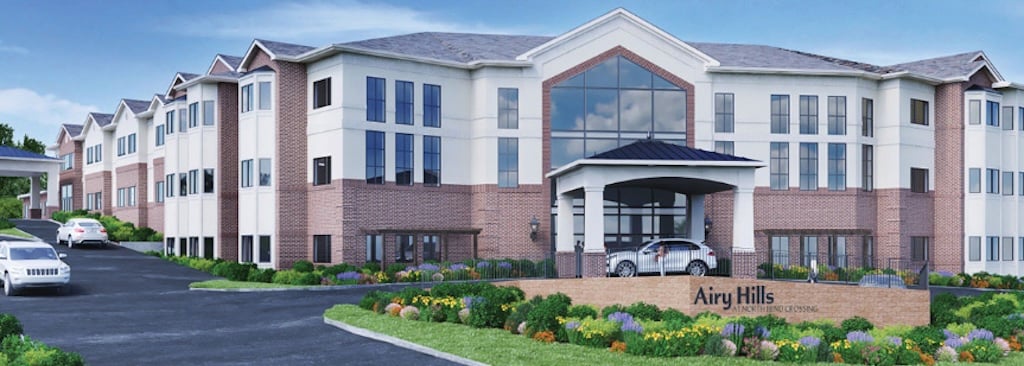
Airy Hills is an 82-unit senior housing community offering 31 assisted living, 32 memory care, and 19 rehabilitation units. On the $29 million new construction project, PACE Equity Finance identified $5.5 million in eligible improvements and provided C-PACE financing for 19% of the capital stack. That capital filled the gap without outside equity partners, allowing the developer to retain full control, sole ownership, and 100% of the return.
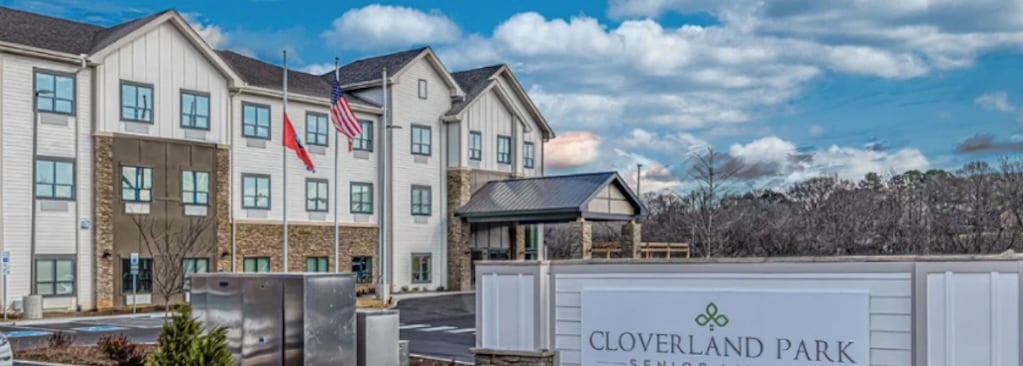
Cloverland Park Senior Living | Brentwood, Tennessee
Cloverland Park, a 100-unit, 115-bed private-pay assisted living and memory care community outside Nashville, had a construction loan maturing mid-lease-up. On the $31.5 million project, PACE Equity Finance provided a $10.8 million, 30-year C-PACE recapitalization — 34% of the capital stack. Proceeds paid down the senior loan and established a lender-held interest reserve to fund carry costs and operating deficits through stabilization. The firm moved from initial engagement to funding in under 30 days.
Structuring Ahead of the Market
The best time to plan for C-PACE is before the construction loan closes. Building it into the original stack, or mapping a post-completion recapitalization, gives lenders the full picture and gives sponsors a defined path through lease-up. As a direct balance-sheet lender that has funded $1B+ in C-PACE across 200+ transactions, PACE Equity Finance approves in-house with no reliance on syndication.
Where This Leaves Sponsors
C-PACE isn’t a single-phase tool. For senior living sponsors who plan for the full lifecycle, it’s capital that works at every stage.
Senior living developers aren’t waiting for costs to ease or lease-up to accelerate. They’re building capital stacks that carry a community from groundbreaking through stabilization — preserving equity, giving lenders confidence through lease-up, and protecting operations along the way.